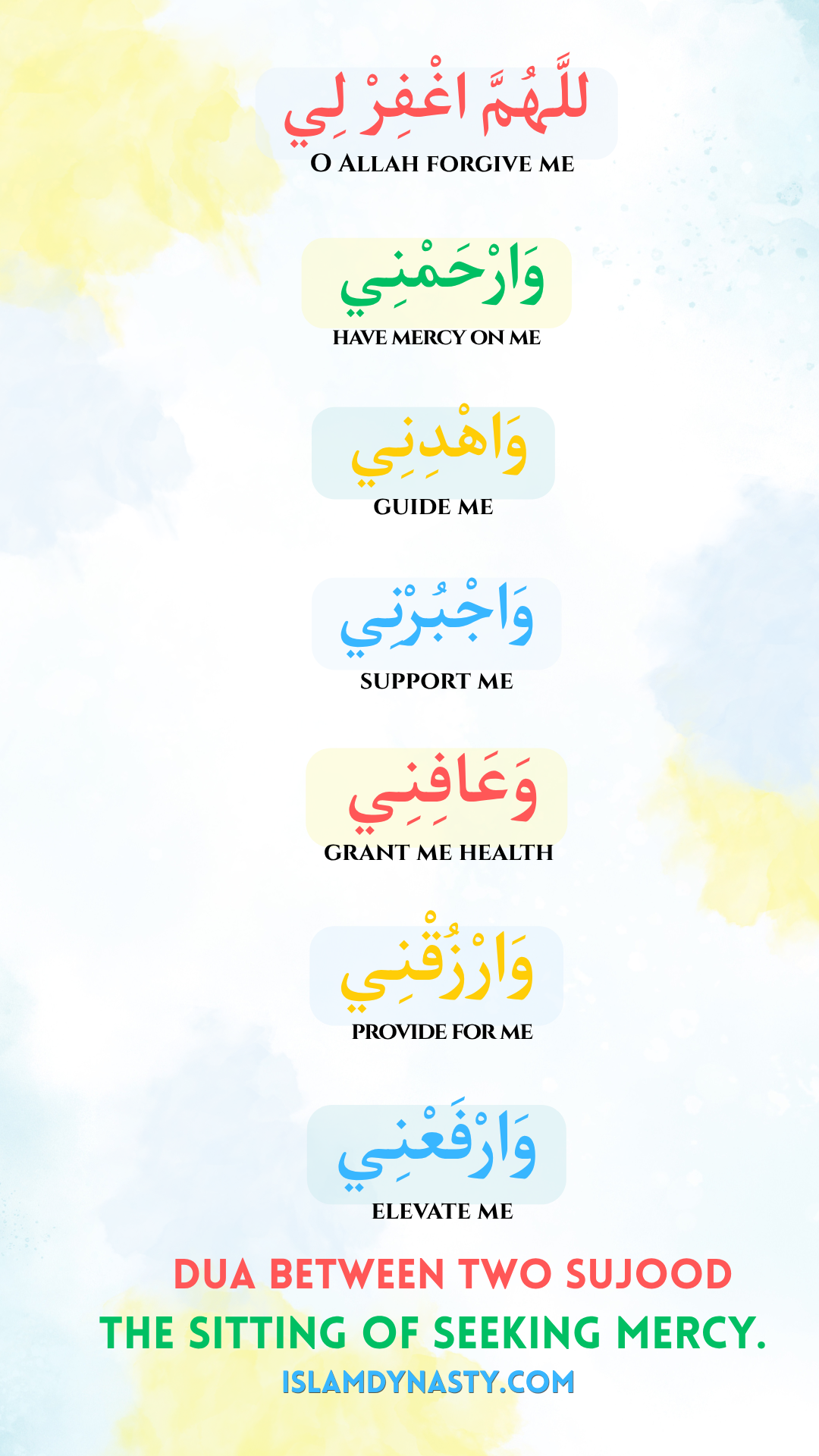
Dua Between Two Sujood: The Meaning of the Sitting of Seeking Mercy

Dua Between Two Sujood: The Sitting of Seeking Mercy
The sitting between the two prostrations is important. This position is vital for your daily prayer (Salah). Scholars call this posture Jalsah bayna as-Sajdatayn. However, it has another beautiful name. It is called Jalsat at-Tarahhum. This name means “The Sitting of Seeking Mercy.” Therefore, learning this prayer will change your worship.
What is the Sitting of Seeking Mercy?
Many Muslims rush through this brief pause. They view it as a quick physical transition. However, Prophet Muhammad (ﷺ) sat here for a long time. He used this specific time to make dua.
Scholars use the name The Sitting of Seeking Mercy for a clear reason. Specifically, the prayer text focuses entirely on begging Allah for grace. You ask Him for pardon and protection during this moment.
Two Authentic Versions of the Dua
Prophetic traditions record two ways to recite this prayer.
1. The Short Version (Hadith Hudhayfah)
This version focuses strictly on seeking forgiveness. It comes from Sunan An-Nasa’i. Consequently, it is great for short prayers.
- Arabic Text: رَبِّ اغْفِرْ لِي، رَبِّ اغْفِرْ لِي
- Transliteration: Rabbighfir lee, Rabbighfir lee
- English Meaning: “O my Lord, forgive me. O my Lord, forgive me.”
2. The Long Version (Hadith Ibn Abbas)
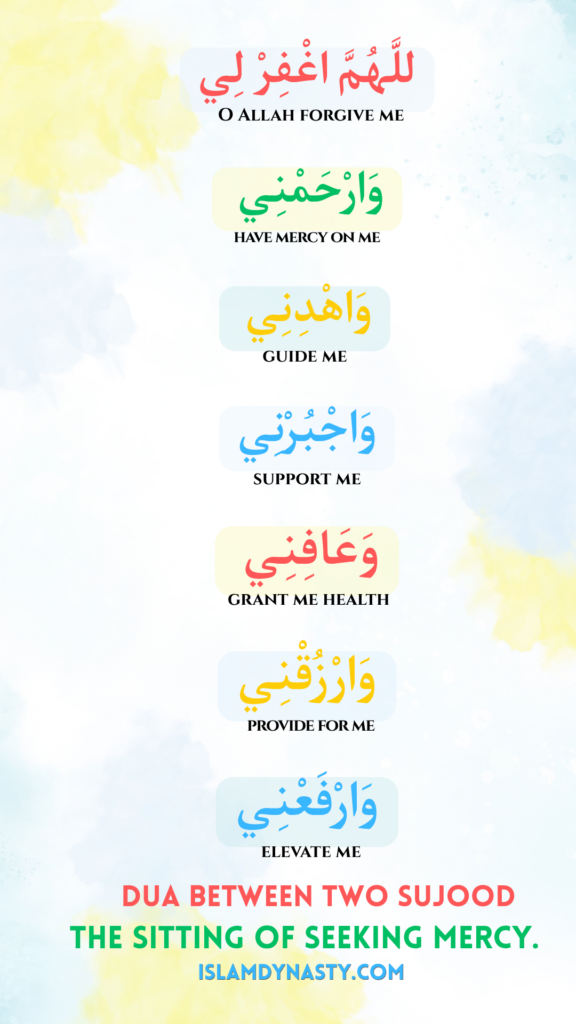
This comprehensive version comes from Sunan At-Tirmidhi. It asks Allah for seven separate blessings.
- Arabic Text: اللَّهُمَّ اغْفِرْ لِي، وَارْحَمْنِي، وَاجْبُرْنِي، وَاهْدِنِي، وَارْزُقْنِي، وَعَافِنِي، وَارْفَعْنِي
- Transliteration: Allahumma-gghfir lee, warhamnee, wajburnee, wahdinee, warzuqnee, wa ‘aafinee, warfa’nee
- English Meaning: “O Allah, forgive me, have mercy on me, mend my affairs, guide me, provide for me, grant me health, and elevate my status.”
The 7 Requests Explained
Every word in the long version has a deep purpose. First, asking to forgive me (Ighfir lee) erases past sins. Second, asking to have mercy on me (Arhamnee) grants divine love. Third, asking to mend my affairs (Ujburnee) restores your broken life. Fourth, asking to guide me (Ihdinee) keeps you steadfast. Fifth, asking to provide for me (Arzuqnee) brings halal wealth. Sixth, asking to grant me health (‘Aafinee) protects from illness. Finally, asking to elevate me (Arfa’nee) raises your eternal rank.
Two Golden Rules for This Position
To pray correctly, you must follow two Sunnah rules:
- Achieve Calmness: First, you must sit completely upright. Rest your bones until you are perfectly still. Do not rush back down to sujood. Rushing can invalidate your entire prayer.
- Vary the Recitations: Second, alternate between both versions. This practice helps maintain your mental focus. Additionally, it revives the Sunnah.